Manual Interior Cleaning and Care
A well-maintained vehicle interior not only ensures a pleasant driving experience, but also helps preserve the vehicle’s value over the long term. Achieving professional results requires a material-specific approach, as textiles, leather, Alcantara and plastics differ significantly in their structure, sensitivity and maintenance requirements.
This how-to video demonstrates the practical application. The information below provides additional technical knowledge behind each step of the process.
Cookies must be allowed in order to view this content. Learn more
Preparation: Vacuum Thoroughly
Before manual cleaning, the vehicle interior should be thoroughly vacuumed. This removes dust, sand and other loose contaminants before working on the surface with a cloth or brush.
This step is particularly important for sensitive surfaces: hard dirt particles can act like fine abrasives during subsequent mechanical cleaning and may unnecessarily wear or damage surfaces.
Cleaning: Combine Chemistry and Mechanics Correctly
Effective manual cleaning is based on the interaction of cleaning chemistry, dwell time and mechanical assistance.
The cleaner loosens and mobilises dirt and contamination. A microfiber cloth, detailing brush or suitable cleaning brush provides mechanical support during this process. Afterwards, loosened dirt and excess cleaner residues are removed using a second clean, slightly damp microfiber cloth.
As a general rule: as intensive as necessary, but as gentle on the material as possible.
Textiles and Upholstery
For textiles and upholstered seats, use the Interior Cleaner. It removes dirt, neutralises unpleasant odours and is suitable for textiles, leather, Alcantara and plastic surfaces within the vehicle interior.
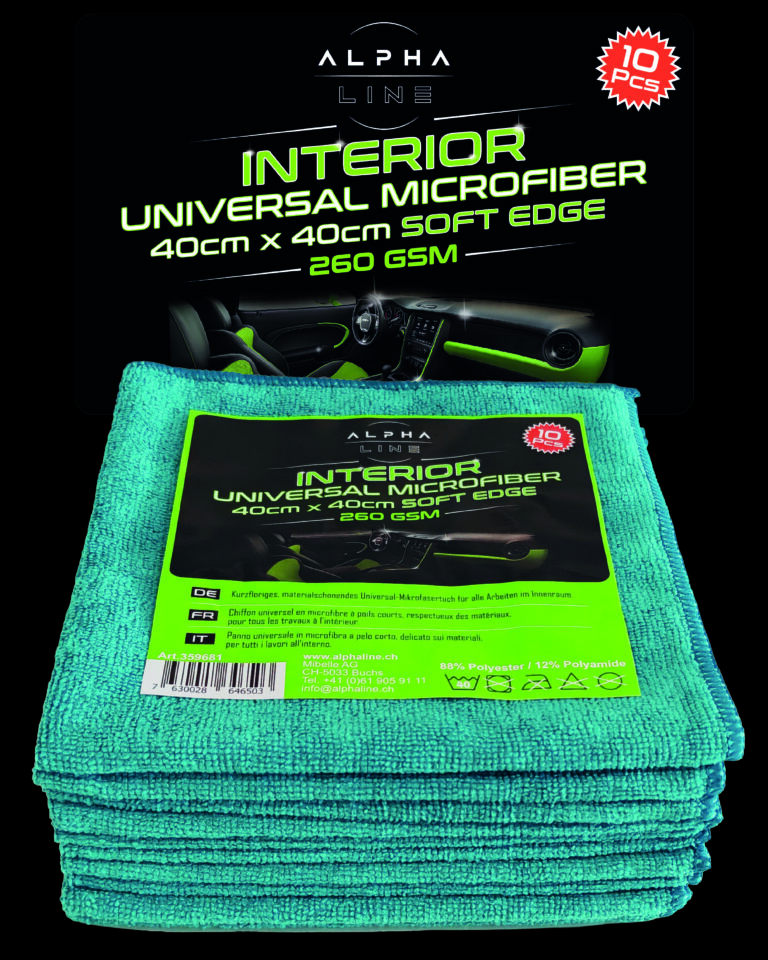
For light to moderate soiling, spray the Interior Cleaner onto a short-pile microfiber cloth and clean the surface evenly. Applying the product via the cloth allows for particularly controlled and economical use.
For heavier contamination, the Interior Cleaner can also be sprayed directly onto the upholstery. This allows more product to be applied precisely where needed and enhances cleaning performance. The surface should then be worked evenly using a microfiber cloth or a suitable upholstery brush.
Even when applying directly, only use the amount of product required for cleaning. Excessive saturation of the upholstery should be avoided.
Important: Whenever possible, clean complete sections, for example from seam to seam. Spot cleaning may cause visible transitions or watermarks, especially on heavily soiled textiles.
Leather: Assess Condition and Level of Contamination
Before cleaning leather, its condition and level of contamination should first be evaluated.
For heavier soiling, pre-cleaning with the Interior Cleaner may be necessary. For light contamination, the Leather Clean & Care Lotion is often sufficient on its own.
For mechanical cleaning, a soft microfiber cloth or horsehair brush is recommended. A soft brush can be particularly useful on textured leather surfaces, helping to loosen dirt from the grain structure.
Technical Insight: The Surface Matters More Than the Leather Itself
With modern automotive leather, cleaning is generally not performed directly on untreated leather. The visible surface is usually pigmented and protected by a topcoat.
This topcoat influences factors such as feel, appearance, abrasion resistance and resistance to contamination. Cleaning should therefore be designed to remove dirt effectively without unnecessarily stressing this protective layer through excessive moisture, aggressive chemicals or excessive mechanical action.
For leather care, the principle is: clean regularly and thoroughly, but as gently as possible.
Alcantara: Preserving the Delicate Fibre Structure
Alcantara requires a different approach than leather. Its characteristic soft, suede-like feel is created by an extremely fine microfiber surface structure.
For this reason, Alcantara should be cleaned only when necessary and as gently as possible. Excessive rubbing, aggressive brushes or unnecessary amounts of product can damage the fibre structure and permanently alter the appearance of the surface.
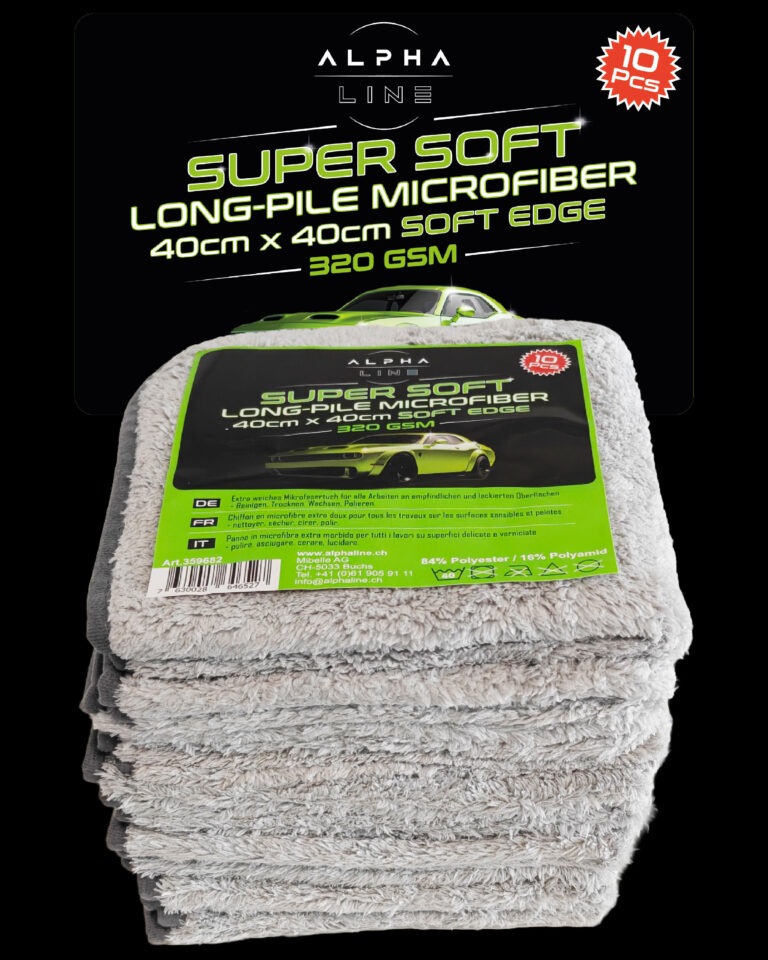
For cleaning, use a soft long-pile microfiber cloth or an appropriately soft brush.
Technical Insight: Alcantara Is Cleaned, Not Traditionally Conditioned
Alcantara is a synthetic material and does not require nourishing or conditioning leather-care products. Products that leave behind a film or conditioning agents can negatively affect the delicate fibre structure, altering both appearance and feel.
The goal is therefore not to “condition” Alcantara after cleaning, but to maintain its clean, soft and uniform fibre structure.
Plastic Surfaces: Thoroughly Clean Surface Structures
For textured plastic surfaces, a detailing brush is particularly effective. The fine bristles reach recesses, textures, edges and transitions that are difficult to access with a microfiber cloth alone.
The Interior Cleaner loosens and mobilises dirt and deposits. Afterwards, loosened contamination and cleaner residues should be completely removed with a clean microfiber cloth.
This approach is especially important for plastics: not only the loosened dirt, but also any excess cleaner should be removed from the surface before applying the appropriate dressing or protectant.
Care and Protection: Match the Product to the Material
Following thorough cleaning, apply the appropriate care product for the specific material. This is not only about improving appearance, but also about maintaining surface properties and protecting against future contamination and ageing.
Leather Care
For leather interiors, use the Leather Clean & Care Lotion. It nourishes and protects the leather surface, refreshes its appearance and helps preserve the protective coating over the long term.
Apply the lotion sparingly and evenly. A properly maintained leather surface should look natural and should not exhibit an excessively glossy or greasy film.
Visible Plastic Surfaces
For dashboards, door panels and other visible plastic components, use Cockpit Clean & Care. It provides a uniform satin-matte finish and offers antistatic properties that help reduce dust attraction.
A satin finish is particularly beneficial in the cockpit area, as excessive gloss can create distracting reflections in the windshield, especially from the dashboard.
Heavily Used Plastic Areas
For durable and heavily used plastic components, such as footwell and cargo area trims, the Tyre & Plastic Care product is recommended.
It noticeably restores colour depth, provides a deep black finish and offers long-term protection against ageing.
The same principle applies here: apply sparingly and evenly. Using more product does not automatically improve the result. A thin, uniform application produces a much more consistent and professional finish.
The Principle of Professional Interior Care
Professional interior cleaning is not about using as much cleaner as possible or applying the strongest possible mechanical action.
The key is the correct combination of material knowledge, suitable cleaning chemistry, appropriate mechanical action and controlled product application.
Textiles can generally withstand more intensive treatment when heavily soiled, while leather and especially Alcantara require a gentler approach. Plastic surfaces, on the other hand, benefit from the combination of chemical cleaning and targeted mechanical agitation of their textured structures.
By understanding and respecting these differences, it is possible not only to achieve excellent cleaning results, but also to preserve the appearance, feel and value of the vehicle interior over the long term.